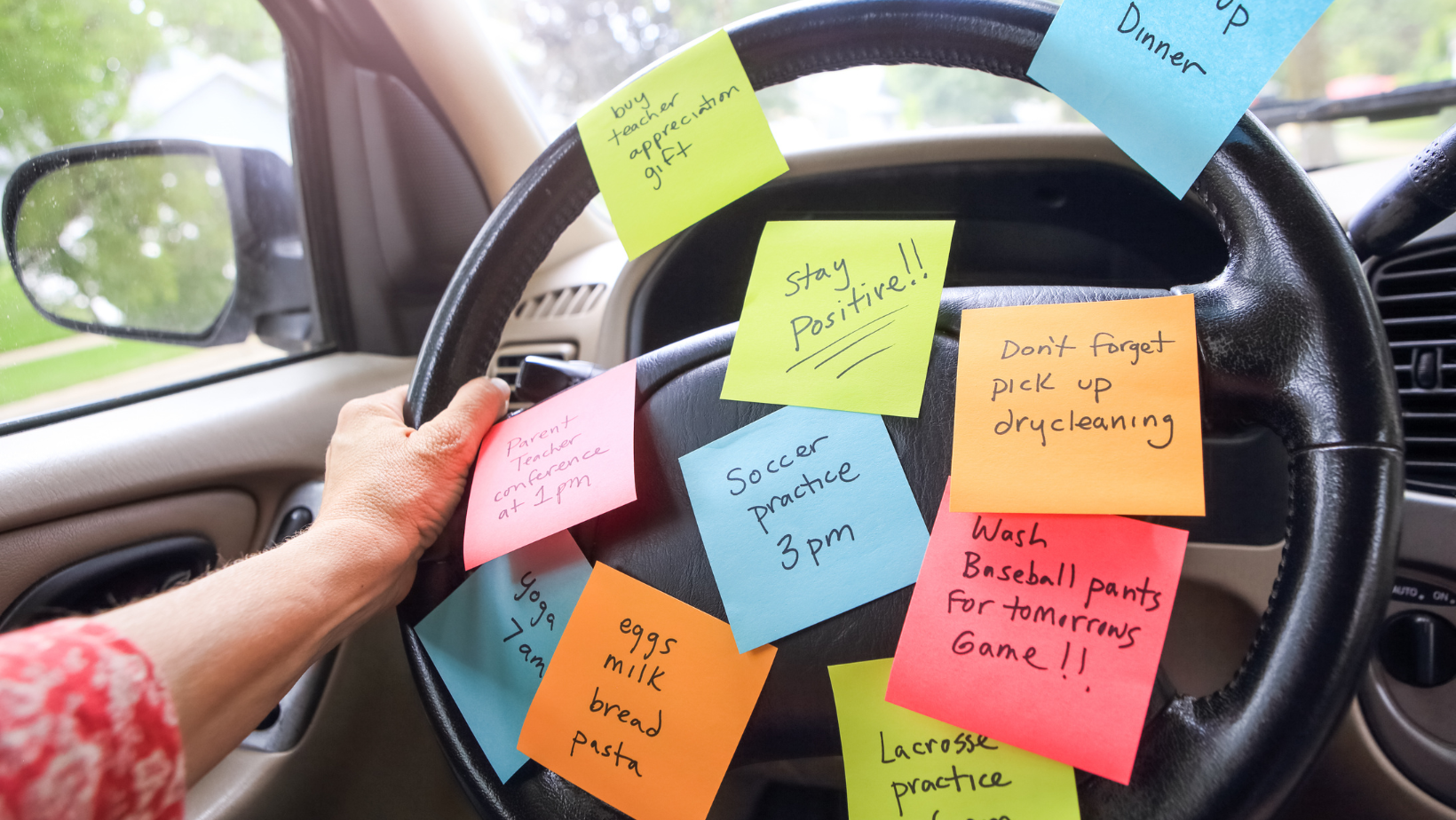

Is Your Busy Life Leaving You Constantly Stressed?
Sometimes anger is not really about what just happened.
It is the last email after an already exhausting day. The question you have answered three times. Your child asking for something when you are trying to finish one last task. Your partner bringing up an issue when you feel like you have nothing left to give.
On its own, the situation may not seem like a big deal. But when you are already carrying a lot of stress, one more demand can feel like too much. You may say something you do not mean, raise your voice, become impatient, or experience a wave of frustration that seems out of proportion to what happened.
This can occur when busyness stops being an occasional demand and becomes a constant state. You are juggling work, family, relationships, appointments, messages, and responsibilities, moving from one task to the next without much opportunity to stop and reset.
Even during a pause, your mind may still be running through what needs to happen next. You are thinking about tomorrow while trying to finish today.
Over time, that pressure can leave your patience shorter and your tolerance for frustration lower. Your body may be under stress long before the triggering moment arrives, and eventually, that strain can affect how you speak to the people you care about and how quickly irritation turns into anger.
Why Pushing Through Does Not Always Work
When busyness has become part of everyday life, pushing through can start to feel like the only option.
There is still work to finish. People still need you. Things still need to get done. So you keep going, even when you are tired or tense.
You may tell yourself that you will rest once everything is finished.
There is always something else waiting.
This is why telling yourself to simply be more patient or handle things better may not be enough. When your body is already activated, you need to work with the physical response as well as the thoughts that come with it.

When Stress Never Gets a Chance to End
Our bodies are designed to respond to stress. When something feels threatening, the nervous system prepares us to act. Your heart rate may increase, your muscles can tense, your breathing can change, and your attention becomes focused on what needs to be dealt with.
This response is useful when there is an actual problem that requires your attention. Once the situation passes, your body is designed to settle again.
But when one demand follows another, settling may not happen as often as it needs to.
Instead of moving between periods of activity and recovery, you can find yourself going from one demand straight into the next. There is another email waiting. Another deadline. Another problem to solve. Another responsibility at home. Another notification. Another conversation that needs your attention.Your body has little opportunity to come back down.
Over time, a heightened state of activation can begin to feel normal. You may not even notice how much tension you are carrying because you have become so accustomed to functioning that way.
Your nervous system is simply responding to the demands it is experiencing. What it needs, however, is also time to register that those demands have passed and that you are safe enough to relax.
Without that opportunity, stress can become the background state from which you approach the rest of your day.
Your Body Reacts Before You Have Time to Think
When your body has been under stress for a long time, it can react more quickly when something unexpected happens.
It might be a comment from your partner, a difficult conversation, an unexpected request, or someone interrupting you when you are trying to concentrate. In those moments, your body may begin responding before you have had time to fully think through what happened.
Your jaw tightens. Your shoulders tense. You feel heat in your face. Your heart may start beating faster.
Your thoughts can become more reactive too. You may suddenly feel ready to defend yourself, argue, push back, or prove your point.
The reaction can happen quickly because your body is preparing you to respond before your thinking has fully caught up.
When you are already carrying a high level of stressf, there may be very little space between the trigger and your response. A conversation can escalate before you have had a chance to consider what you actually want to say.
This is why emotional regulation matters. It is not about pretending you are not angry or forcing yourself to suppress what you feel. It is about creating enough space to notice what is happening, understand your reaction, and choose how you want to respond.
Ways to Help Your Body Handle Constant Stress
When you are constantly busy, the goal is not to eliminate every demand from your life. That is not realistic.
The goal is to give your body opportunities to come out of that constant state of urgency, so stress does not continue building until you have very little patience left.
Somatic practices can help because they work with the body, not just with your thoughts. They give you practical ways to notice rising tension, interrupt the buildup of stress, and create a little more space before frustration turns into anger.
Build Small Moments of Recovery Into Your Day
If you move from one responsibility to the next without much time in between, the stress from one task can carry into the next. By the end of the day, you may be carrying tension from hours of work, errands, conversations, and other demands without having had much opportunity to release it.
You do not need to set aside hours for rest to interrupt this pattern. Even small moments throughout the day can give your body a chance to slow down and release some of that accumulated tension.
Go outside for a few minutes. Spend some time in nature. Take a walk. Move your body. Sit quietly without immediately reaching for your phone. Take a few slow breaths between tasks.
You can also create a transition between different parts of your day. For example, taking a few minutes before walking through the front door after work can give your body a chance to settle before you move into family time.
These small breaks can help keep stress from accumulating throughout the day. You are not adding another task to your already busy day. You are creating small spaces where your body can recover before the next demand arrives.

Focus on Your Breathing
Your breathing is one of the simplest ways to help your body slow down when stress begins to build.
When you notice yourself becoming tense, rushed, or impatient, pause and bring your attention to your breath.
Breathe slowly through your nose and allow the breath to move deeply into your abdomen. Take your time and focus on making the breath slower and deeper.
You may notice your muscles beginning to soften and your thoughts becoming less urgent.
This can be especially useful during a busy day because you do not need to stop everything to do it. You can take a few slow breaths before answering an email, moving from one meeting to another, getting into the car, or responding to someone who is asking something of you.
Practising slow breathing when you are relatively calm also matters. The more familiar your body becomes with slowing down, the easier it may be to turn to your breath when stress begins rising.
Create a Pause Before You Speak
Constant stress can make it much easier to react quickly.
You may be tired, distracted, already thinking about everything you still have to do, and then someone says something that irritates you. The words may come out before you have had time to decide whether that is actually how you want to respond.
This is where creating a physical pause can help.
When you feel the urge to argue, defend yourself, or say something in anger, stop talking.
Get a glass of cold water. Drink it slowly. Give yourself a few quiet moments before continuing the conversation.
The purpose is not to avoid the issue. It is to interrupt the immediate reaction long enough for your body to settle and your thinking to catch up.
When you have been moving quickly all day, deliberately slowing down for even a minute can make a difference in what happens next.
Look Around and Notice Where You Are
Another simple somatic practice is called orienting.
When you are under constant stress, your attention can become locked onto whatever needs to be dealt with next. Your mind moves from the email to the deadline, from the deadline to the appointment, from the appointment to the next problem.
When something frustrating happens, that narrowed attention can make it harder to step back and see the situation clearly.
Orienting gives your body and attention something different to do.
Slowly look around the room. Notice the walls, furniture, windows, colours, shapes, and objects around you.
Take your time.
Allow yourself to actually look at your surroundings instead of immediately returning to the problem in your mind.
This can be particularly helpful when you notice yourself becoming overwhelmed or increasingly frustrated. You are giving your attention a chance to move away from the constant mental pressure of what needs to happen next and reconnect with what is happening in the present moment.
Give Yourself Time to Think
When you are carrying stress from one part of your day into the next, even a small problem can feel much bigger than it actually is.
Before reacting, give yourself a moment to consider the situation.
Ask yourself:
How important is this really?
How important will it feel in an hour? Tomorrow? Next week?
This does not mean telling yourself that your feelings do not matter. It means giving yourself enough space to separate the immediate frustration from the larger picture.
You can also ask yourself:
What kind of memory do I want to create here?
If you are speaking to your child, your partner, or someone you care about, this question can help you step back from the reaction you are having in that moment and reconnect with how you want to handle the situation.
You still have the right to be angry.
You still have the right to address something that hurt you, frustrated you, or crossed a boundary.
The goal is to give yourself enough space to decide how you want to address it rather than allowing accumulated stress to decide for you.

Pay Attention to the Early Signs
One of the most useful things you can learn when dealing with constant stress is how your body tells you that you are reaching your limit.
Maybe your jaw starts tightening. Your shoulders rise. You become restless. Your breathing becomes shallow. You notice that small interruptions are suddenly bothering you much more than usual.
These signs can appear before anger does.
Learning to recognize them gives you an opportunity to intervene earlier.
Instead of waiting until you are already snapping at someone, you can notice, I am getting tense. I need to slow down.
That might mean stepping outside for five minutes, taking a walk, breathing slowly, getting some water, or simply giving yourself a few minutes without another demand.
The earlier you notice these signs, the more opportunity you have to respond before frustration builds into anger.
Give Yourself Some Compassion
If you are constantly stressed, increasingly irritable, or finding yourself reacting more strongly than you want to, try not to turn that into another reason to criticize yourself.
Your brain is not broken.
Your body may simply be carrying more stress than it has had the opportunity to recover from.
Instead of asking yourself, Why am I reacting like this? What is wrong with me? try becoming curious about what is happening.
What has your day been like?
How much have you been carrying?
When did you first notice yourself becoming tense?
What were you feeling before the anger appeared?
This kind of awareness can help you see anger as a signal rather than simply something you need to get rid of.
You cannot always remove the demands from your life. There will still be deadlines, responsibilities, interruptions, difficult conversations, and days when everything seems to happen at once.
But you can begin giving your body more opportunities to come out of that constant state of urgency.
You can notice the tension earlier.
You can breathe before reacting.
You can pause before speaking.
You can give yourself a moment to look around and reconnect with the present.
You can ask yourself whether the situation is as important as it feels in that moment.
And you can give yourself permission to be human when you are carrying a lot.
These small practices will not make a busy life stress-free. They can, however, help you interrupt the buildup of stress before it leaves you with no patience, no space to think, and a much shorter distance between frustration and anger.
When Stress and Anger Become Hard to Manage
If stress and anger are affecting your relationships or making everyday life harder to manage, you do not have to figure it out alone.
At Moose Anger Management and Healing Anger, we offer support to people who want to better understand their anger, emotional reactions, relationships, and the patterns underneath them.
To learn more about anger management and counselling support,
- Visit our website.
- Call/text 604-723-5134 for a confidential consultation.
- Join our group sessions for men or group sessions for women. Our online groups provide a supportive space to explore anger, triggers, and healthier ways of responding to life’s challenges.
- Access our specialized one-on-one counseling.
- Email us at info@angerman.ca.